Here are 5 famous open problems that are widely believed to be “search-dominated” problems—meaning the main barrier is exploring enormous spaces of possibilities rather than inventing completely new mathematics. These are exactly the types of problems where AI-guided search systems (like AlphaEvolve-style systems) could realistically make breakthroughs.
1. Determining the exact value of (R(6,6))
Ramsey number R(6,6)
Field: Ramsey Theory
We currently know:
[
102 \le R(6,6) \le 165
]
Meaning:
A graph with 101 vertices exists with no 6-clique or 6-independent set.
But by 165 vertices, such a structure must exist.
The challenge:
The number of graphs on ~100 vertices is astronomically large.
But many are structurally similar.
AI systems could:
search for larger constructions (raise lower bounds)
help prove absence structures with SAT solvers
guide symmetry discovery
Many combinatorialists think this is a prime candidate for AI progress.
2. Better sphere packing constructions in high dimensions
Sphere Packing Problem
The problem asks:
What is the densest way to pack spheres in (n) dimensions?
Visual intuition in 3D:
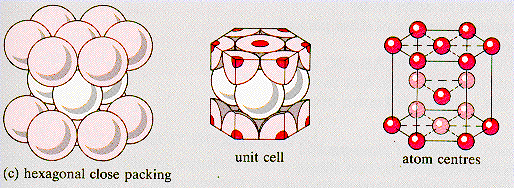


Known spectacular result:
E8 lattice
But for many dimensions (9–30 especially):
best packings are unknown
improvements usually come from clever constructions
AI could search:
lattice structures
algebraic symmetries
packing configurations
This is extremely similar to Ramsey searches.
3. Better error-correcting codes
Coding Theory
Goal:
Maximize how many errors a code can detect or correct.
These are used in:
deep space communication
SSD storage
satellite transmission
QR codes
Visual idea:

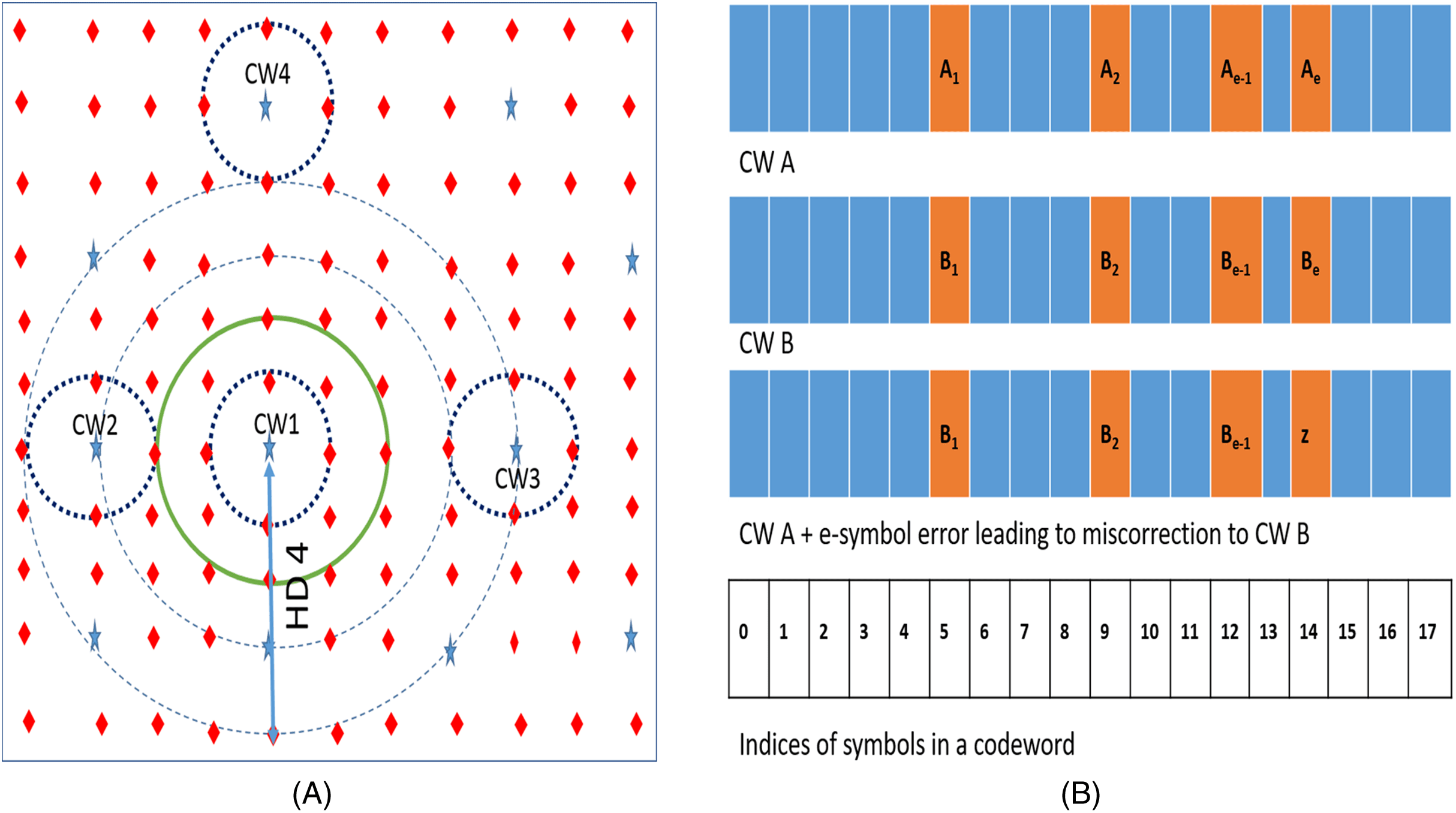


Most record-holding codes historically came from:
clever search
algebraic construction
AI could discover:
new record codes
shorter codes with same error tolerance
Even small improvements have massive engineering impact.
4. Faster matrix multiplication algorithms
Matrix multiplication speed is determined by an exponent ( \omega ).
Current best:
[
\omega < 2.372
]
This matters everywhere:
graphics
machine learning
simulations
cryptography
An AI already surprised mathematicians here:
AlphaTensor
AlphaTensor discovered new multiplication algorithms for specific matrix sizes.
These were not known before.
Researchers suspect AI could:
find better algorithms
push the theoretical exponent lower
Because the problem is fundamentally search over algebraic decompositions.
5. Minimal circuits for cryptography
Cryptographic primitives often depend on:
Boolean circuits
logic gate networks
Example fields:
Cryptography
Circuit Complexity
Goal:
Implement operations with the fewest gates possible.
Why it matters:
faster encryption
lower power hardware
smaller chips
But the design space is enormous.
AI-guided search could explore:
millions of circuit configurations
optimized gate layouts
Why these problems are ideal for AI
They share 4 properties:
Huge search spaces
Clear objective functions
Fast verification
Structured symmetries
This is exactly the environment where systems like:
AlphaGo
AlphaFold
AlphaEvolve
perform extremely well.
The bigger shift happening in science
Historically:
human intuition → theorem
Now we increasingly see:
AI search → candidate structure
human → explanation/proof
AI becomes a discovery engine, not just a reasoning tool.
Some researchers call this the rise of computational discovery.
✅ My personal prediction
In the next 10–20 years, AI search systems will likely:
improve several Ramsey bounds
discover new codes
find better matrix multiplication algorithms
design novel materials
But the biggest impact may be discovering mathematical objects humans didn’t know to look for.
If you want, there’s an even deeper idea behind this trend:
Some mathematicians think many unsolved problems are really “compression problems” rather than reasoning problems.
That idea connects Ramsey theory, AI search, and even physics—and it’s pretty mind-bending.

No comments:
Post a Comment